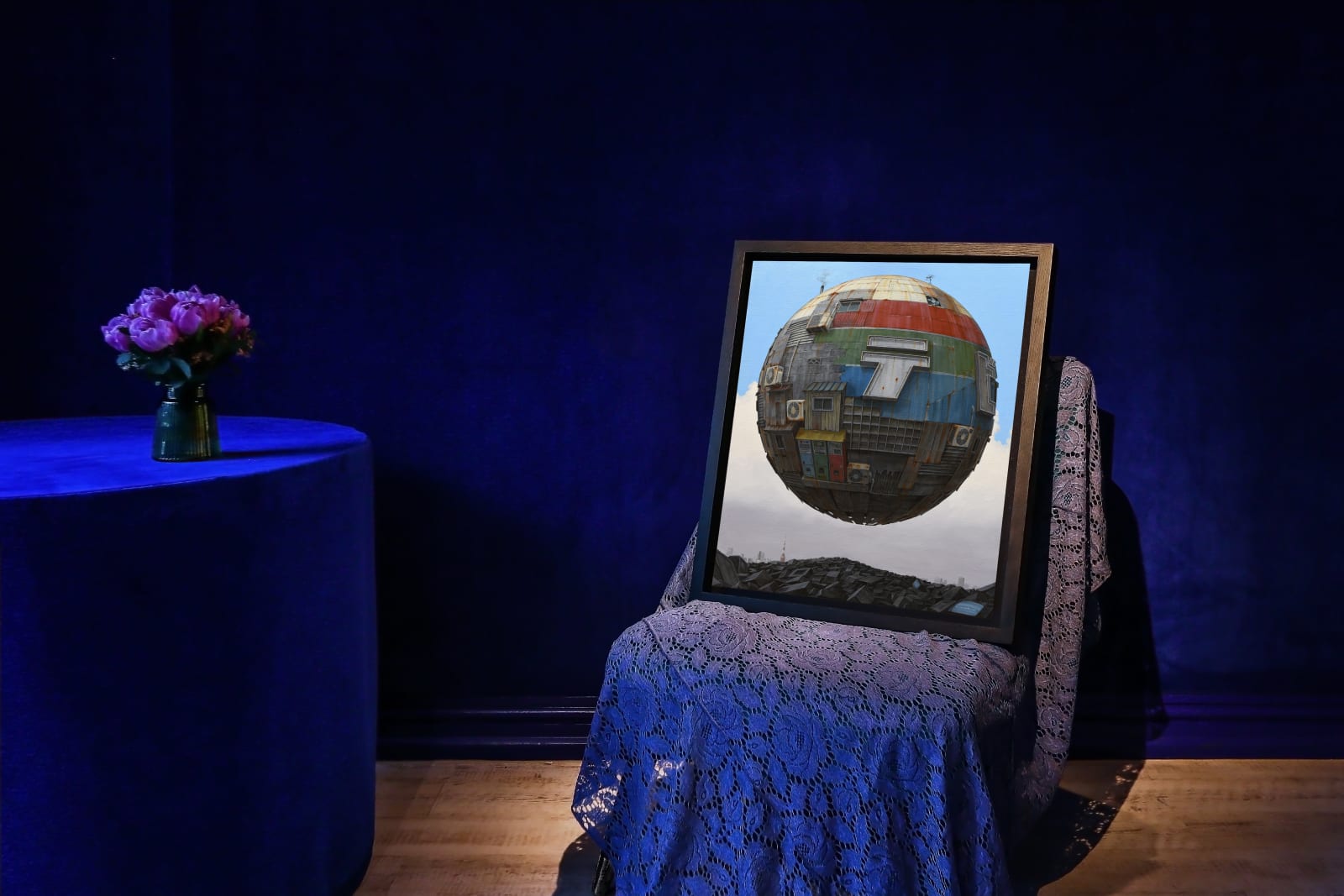
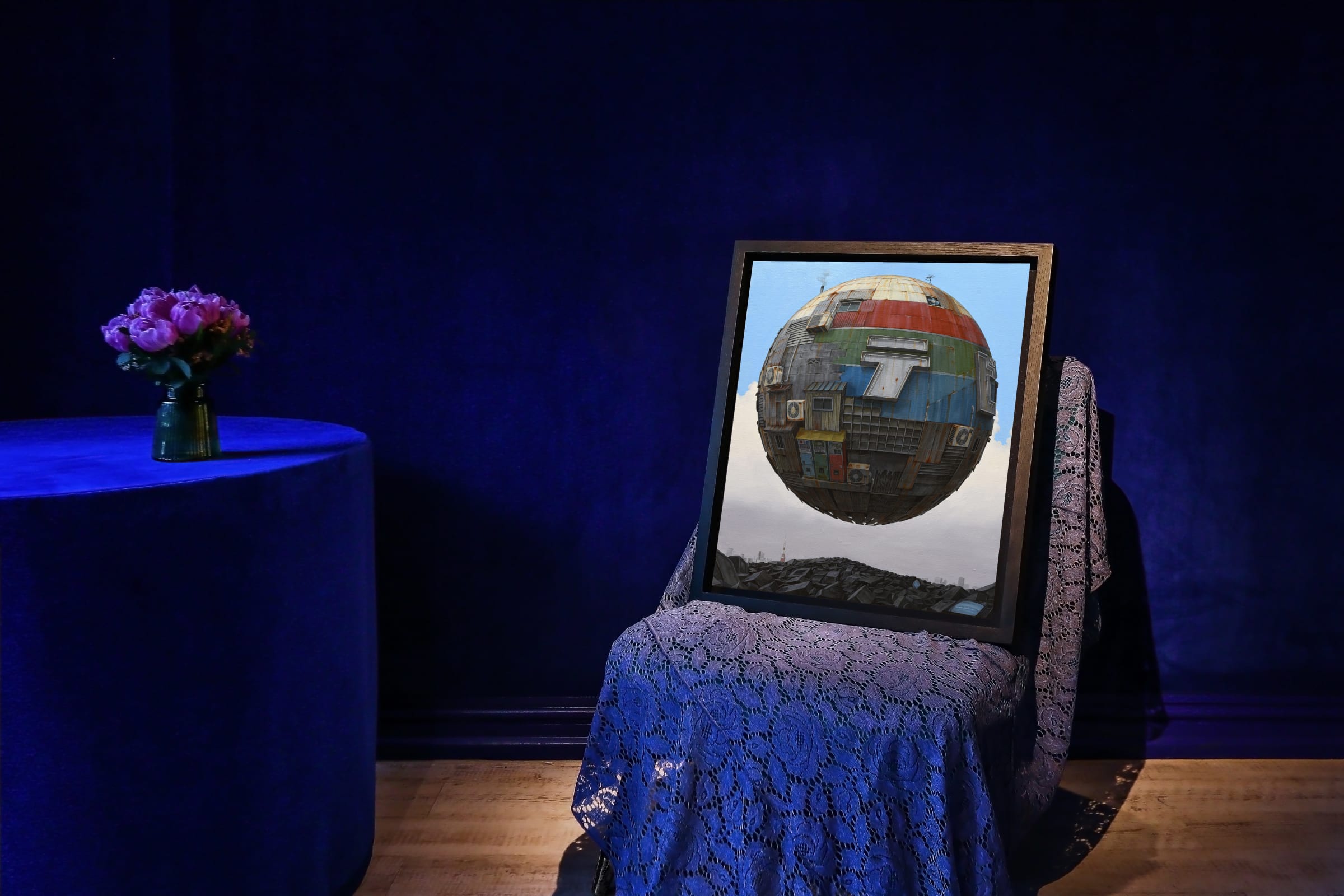
 Render image created for a better understanding of the size of the artwork
Masakatsu Sashie Japan, 1974
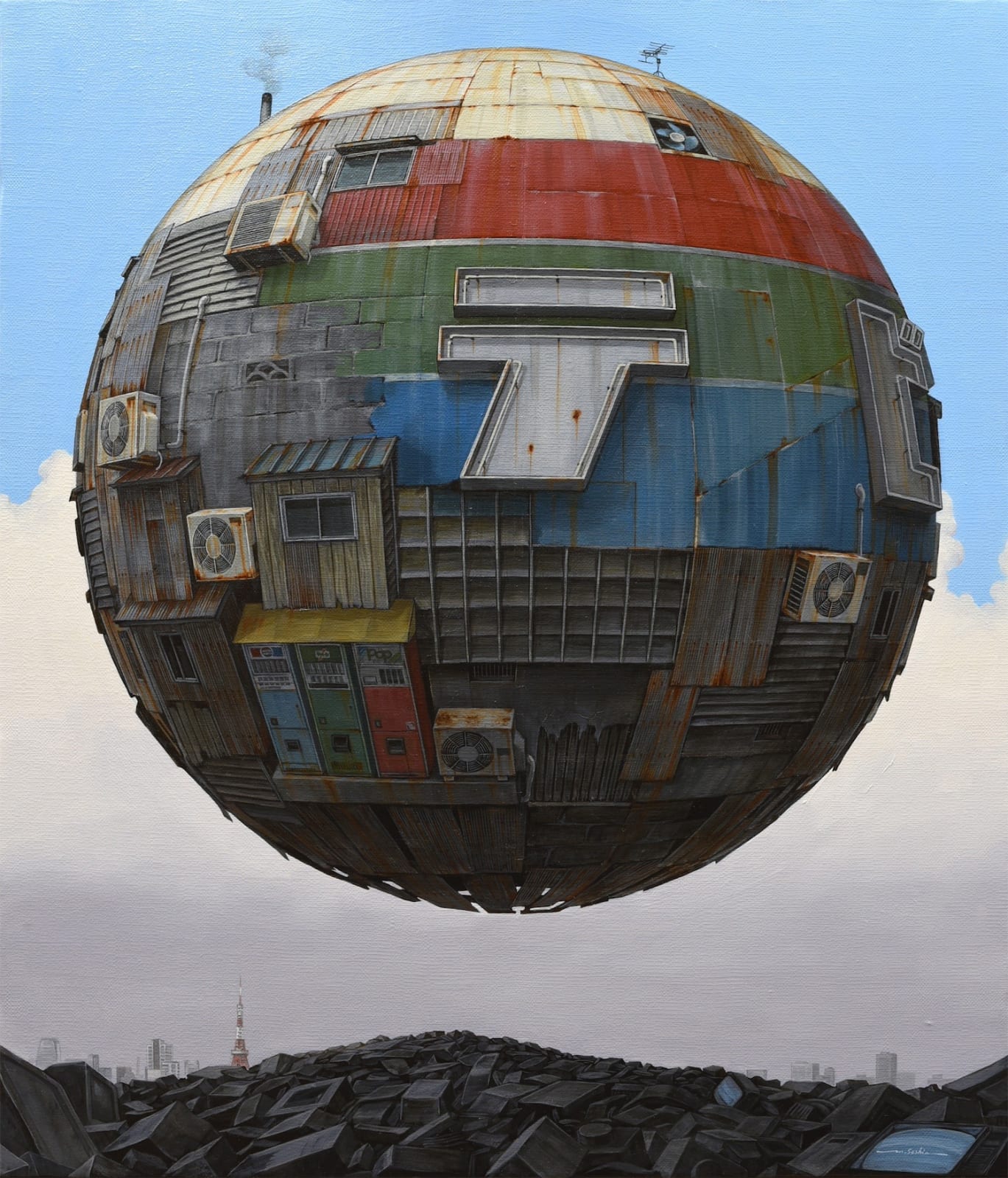
SYMBOL 「テ」, 2025
Oil on Canvas
53cm x 46cm
20.7 x 18.2 in
20.7 x 18.2 in
Copyright The Artist
Sold


SYMBOL「テ」, 2025 In SYMBOL「テ」, Sashie chooses the katakana テ, a character often used in industrial signage, packaging, and technical notations. Katakana itself is the script of modernity — of imported...
SYMBOL「テ」, 2025
In SYMBOL「テ」, Sashie chooses the katakana テ, a character often used in industrial signage, packaging, and technical notations. Katakana itself is the script of modernity — of imported words, mechanisation, and the globalised visual language of commerce.
Placed at the centre of a sphere constructed from fragmented façades, ventilation grids, faded corporate colours, and remnants of mass production, テ becomes a cipher of the technological age. It speaks of systems, design, functionality, and the mechanical rhythms that shaped late-20th and early-21st–century life.
Here, the character functions as a mute, semiotic residue: a symbol detached from meaning, preserved only as form. Sashie points to a future in which language survives only as a graphic trace, stripped of semantic weight. The clean geometry of テ contrasts with the worn, corroded materials surrounding it, making the sphere feel like an abandoned satellite of human industry — a memorial to our era’s obsession with utility, branding, and technical precision.
The work articulates a poignant question: What remains of a civilisation when its language becomes only surface?
In Sashie’s universe, the answer floats quietly in the sky.
In SYMBOL「テ」, Sashie chooses the katakana テ, a character often used in industrial signage, packaging, and technical notations. Katakana itself is the script of modernity — of imported words, mechanisation, and the globalised visual language of commerce.
Placed at the centre of a sphere constructed from fragmented façades, ventilation grids, faded corporate colours, and remnants of mass production, テ becomes a cipher of the technological age. It speaks of systems, design, functionality, and the mechanical rhythms that shaped late-20th and early-21st–century life.
Here, the character functions as a mute, semiotic residue: a symbol detached from meaning, preserved only as form. Sashie points to a future in which language survives only as a graphic trace, stripped of semantic weight. The clean geometry of テ contrasts with the worn, corroded materials surrounding it, making the sphere feel like an abandoned satellite of human industry — a memorial to our era’s obsession with utility, branding, and technical precision.
The work articulates a poignant question: What remains of a civilisation when its language becomes only surface?
In Sashie’s universe, the answer floats quietly in the sky.
13
di
14