When we talk about digital art today, there’s a risk of reducing it to a flat, automated concept — often confused with aesthetics generated by artificial intelligence. In this indistinct, hyper-technological landscape, it is essential to rediscover the authentic roots of a language born from a human and visionary sensitivity. It is here that the name of Ray Caesar rises with inimitable strength.
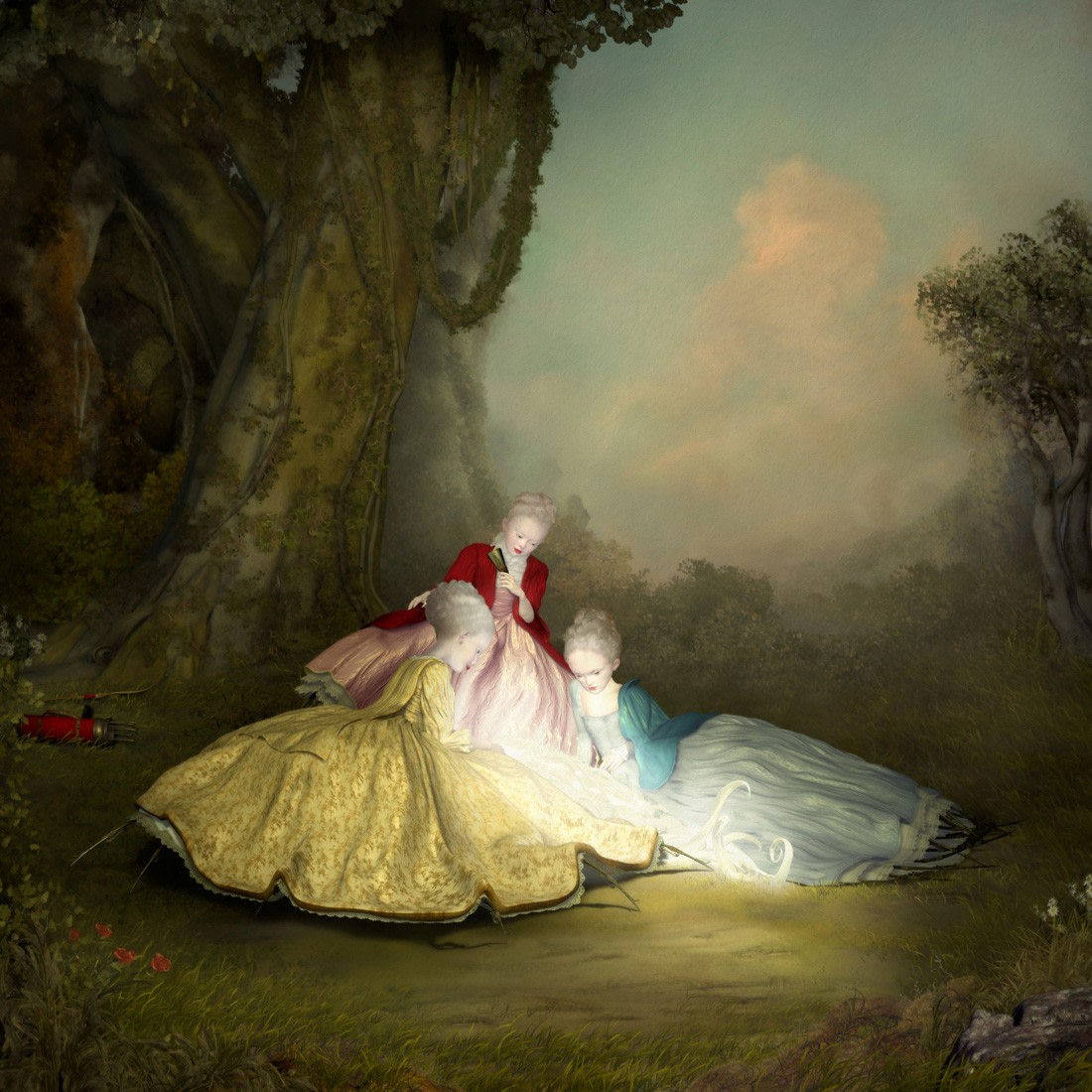
An undisputed pioneer of digital art, Caesar began over twenty-five years ago to create images that no one had dared to imagine before. His technique is digital, yes, but in the most opposite sense of automation. It’s an analogue, artisanal digital — sculpted with the patience and care of a goldsmith.
Caesar models his characters and their worlds through Autodesk Maya, a software commonly used for 3D animation. But what is a technical tool for others becomes, in his hands, a psychoanalytical dollhouse — an inner theatre where his figures move, dress, inhabit secret rooms — and are finally “paused” in an image that is a vision.
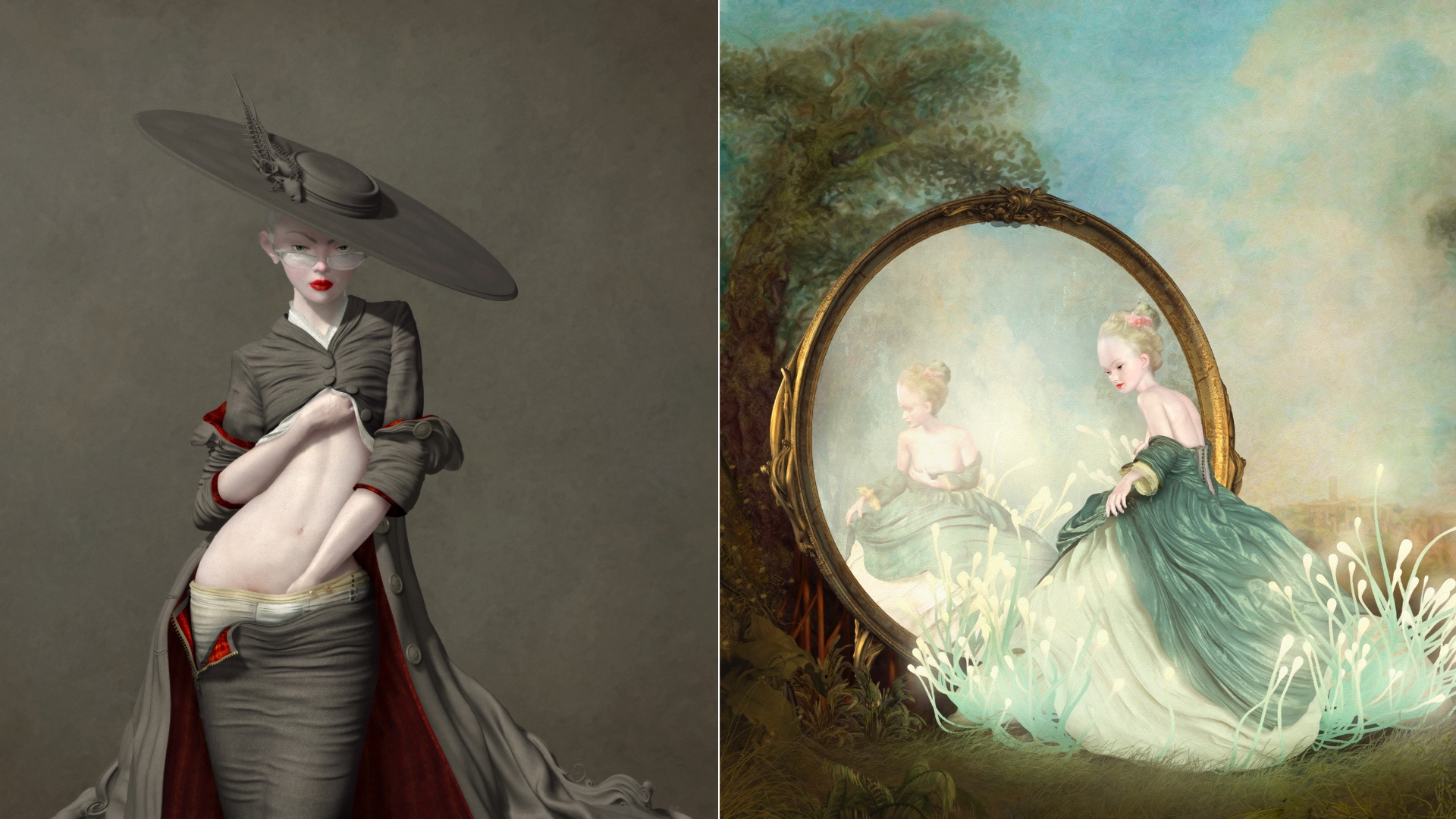
Self-Examination, 2011, Giclèe print on Hahnemühle paper, 76 x 76 cm
Innamorati, 2018, Digital ultrachrome print on hahnemühle paper, 76.2 x 76.2 cm, Edition of 20
Ray Caesar’s work is not just a display of technical virtuosity — it is above all a profound form of emotional inquiry and psychic transformation.
Through art, Caesar dives deep into his unconscious, his traumas, his memories. His characters — androgynous, unsettling and sweet — speak to us of pain and healing, of strangeness and acceptance, of fear and sublimation.
In an age when digital images can be produced without hands, without time, without heart, Caesar’s work reminds us what it means to inhabit a process. His creatures are never generated — they are nurtured, shaped, lived. And they look at us with eyes that seem to say: “Don’t try to solve me. Embrace me.”
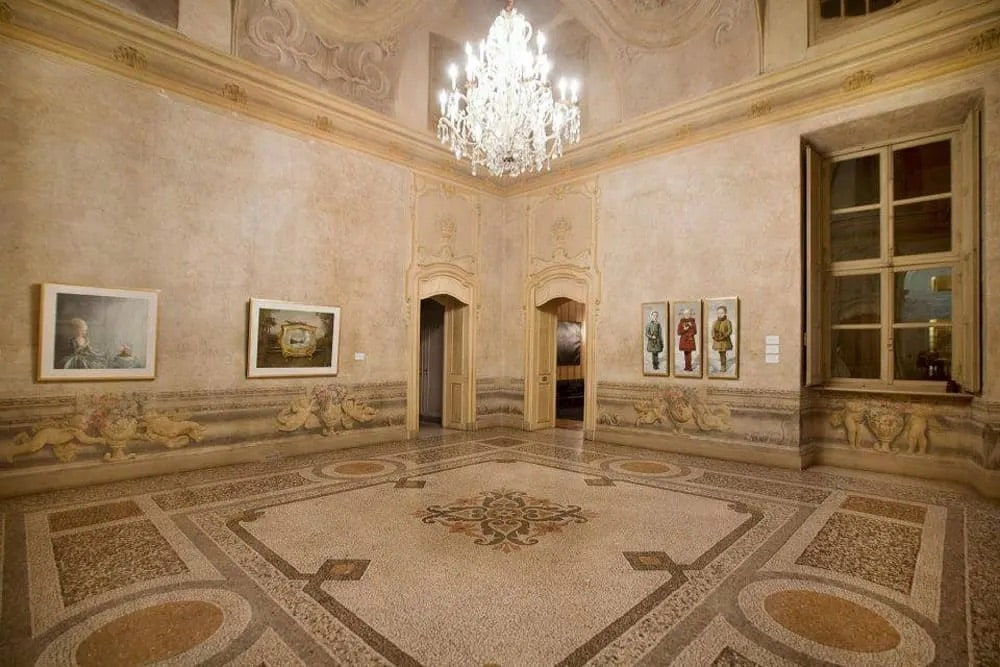
Ray Caesar: The Trouble With Angels, 2014, Palazzo Saluzzo Paesana in Turin
The pioneering and historical value of his work has also been recognised on an institutional level, through the major museum retrospective curated by Alexandra Mazzanti and Enrico Debandi at Palazzo Saluzzo Paesana in Turin, which several years ago celebrated the artist’s entire corpus.
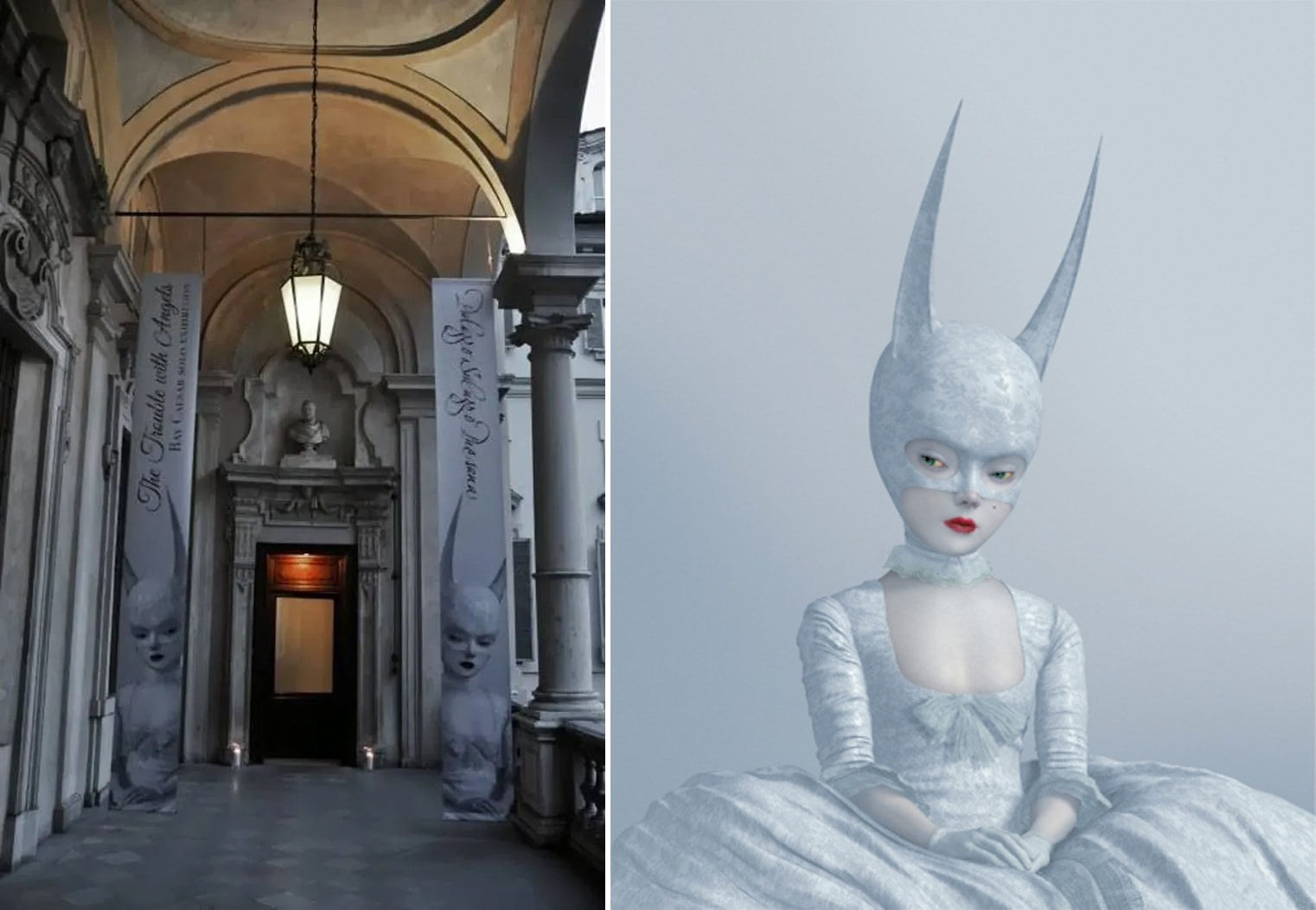
Ray Caesar: The Trouble With Angels, 2014, Palazzo Saluzzo Paesana in Turin
Consort, Digital Ultrachrome print on Hahnemühle mounted on Dibond, 50 x 60 cm
Consort, Digital Ultrachrome print on Hahnemühle mounted on Dibond, 50 x 60 cm
An exhibition that helped establish Caesar as one of the undisputed protagonists of contemporary art, underlining the importance of a body of work that has uniquely merged technology with human depth.
It is no surprise, then, that Ray Caesar is now collected by international celebrities, major private collectors, and institutions: what he has done has been historicised. He opened a path and defined an era.
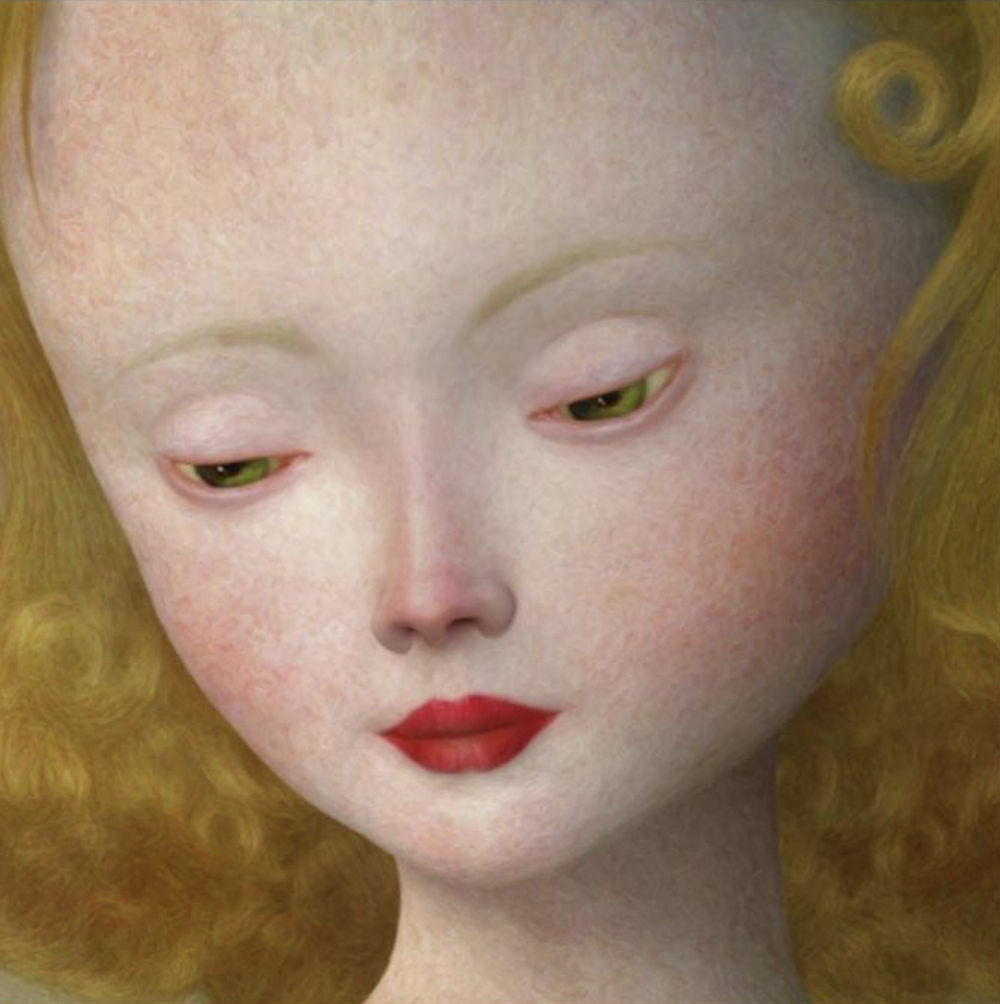
Blessed Fragment, 2019, Digital Ultrachrome & Acrylic on Wood Panel, One of a Kind, 20 x 20 cm, 26 x 26 cm Framed
Another crucial distinction lies in the nature of his works: Caesar produces extremely limited editions, often of 10 or 20 prints. However, some pieces are conceived as “single varnished editions” — a single print, finished, signed, and unique. These works are not just rarer: they are unrepeatable emotional manifestos, suspended moments in which Caesar has chosen to halt a world forever, with an almost painterly act of finalisation.
Ray Caesar’s art does not aim to untangle a mystery. It wants us to love its complexity — to reveal the strange, imperfect, and precious beauty of what we are. In this sense, his works are visual rituals of healing: they help us become witnesses and guardians of our innermost selves.
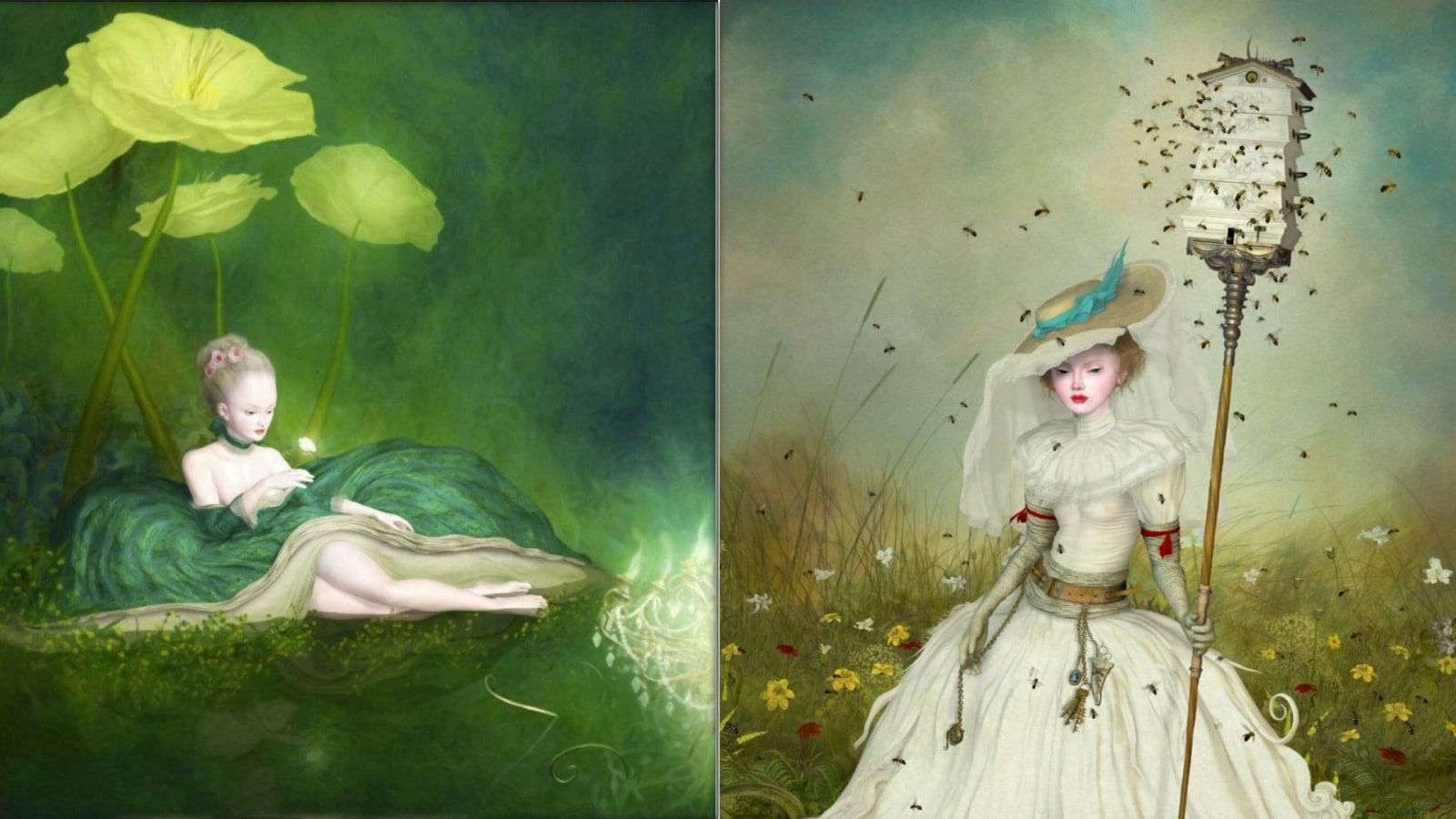
Naiad, 2018, Digital Ultrachrome on Archival Paper, 61 x 61 x 2.5 cm
Royale, 2018 Digital Ultrachrome print on Hahnemühle paper, 61 x 61 cm, Edition of 20
Royale, 2018 Digital Ultrachrome print on Hahnemühle paper, 61 x 61 cm, Edition of 20
Ray Caesar’s unique talent and artistic practice set him far beyond the bounds of digital art. It’s no surprise that his work has attracted major names, including Madonna, who shared his work on her Instagram.
He is an alchemist of image.
He is the digital body of the soul.
He is an alchemist of image.
He is the digital body of the soul.


